HomeCapabilitiesProductsSolutionsCasesAbout UsContactGet a Proposal
中文版

Products & Equipment

Seven equipment categories covering the key processes of assembly, cleaning, inspection, conveying, dispensing and robotic work. Every machine is redesigned around the customer's process parameters — none of them is an off-the-shelf product.

Home  /  Products & Equipment
Built In House

Equipment under way in the workshop

These are shot in our own workshop — frames, feeders, conveyors and electrical panels are assembled and commissioned here, and proven on real parts before shipping.
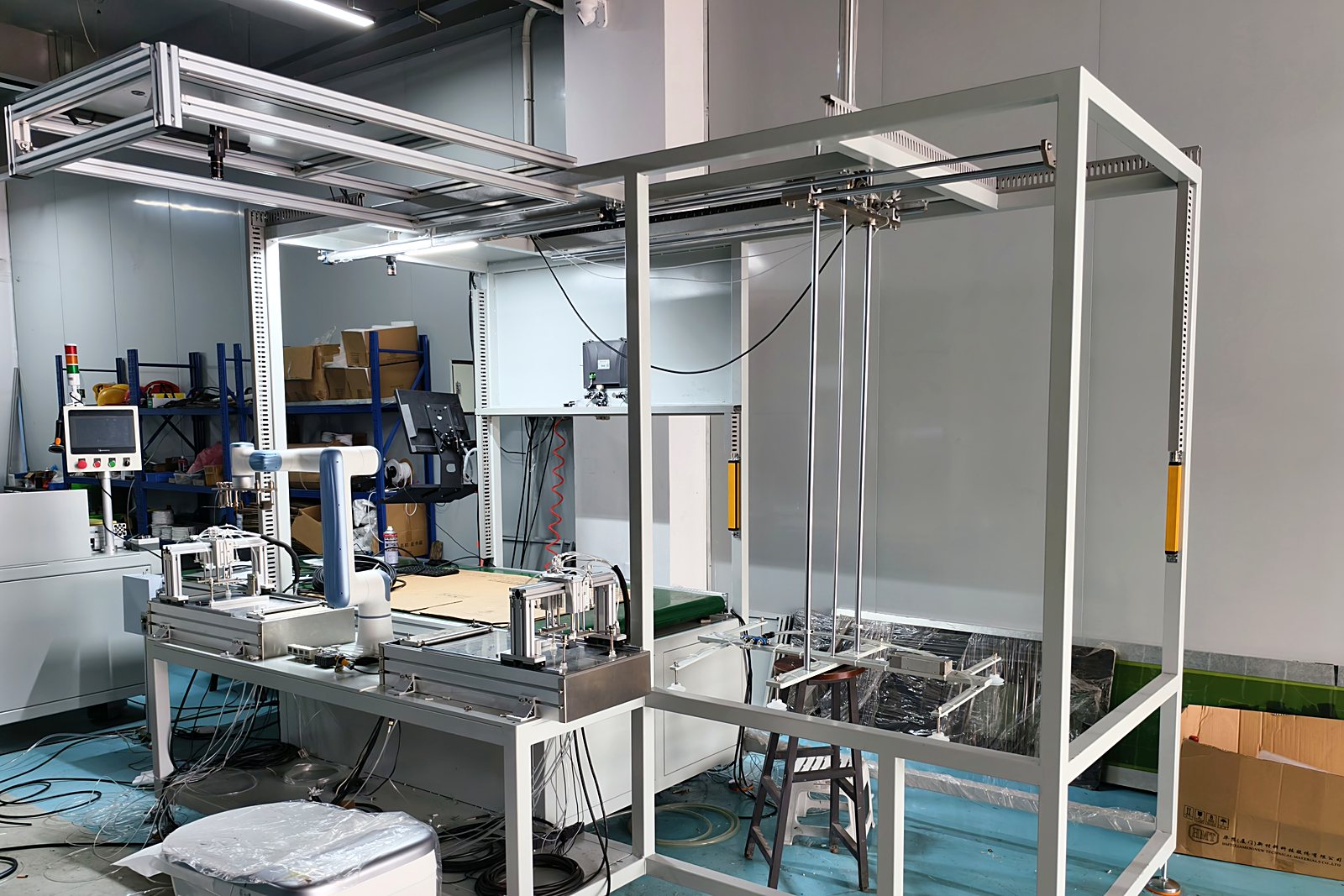
Custom automation machine on an aluminium frame during assembly
Custom machine under assemblyAluminium frame · vision station · load and unload mechanisms
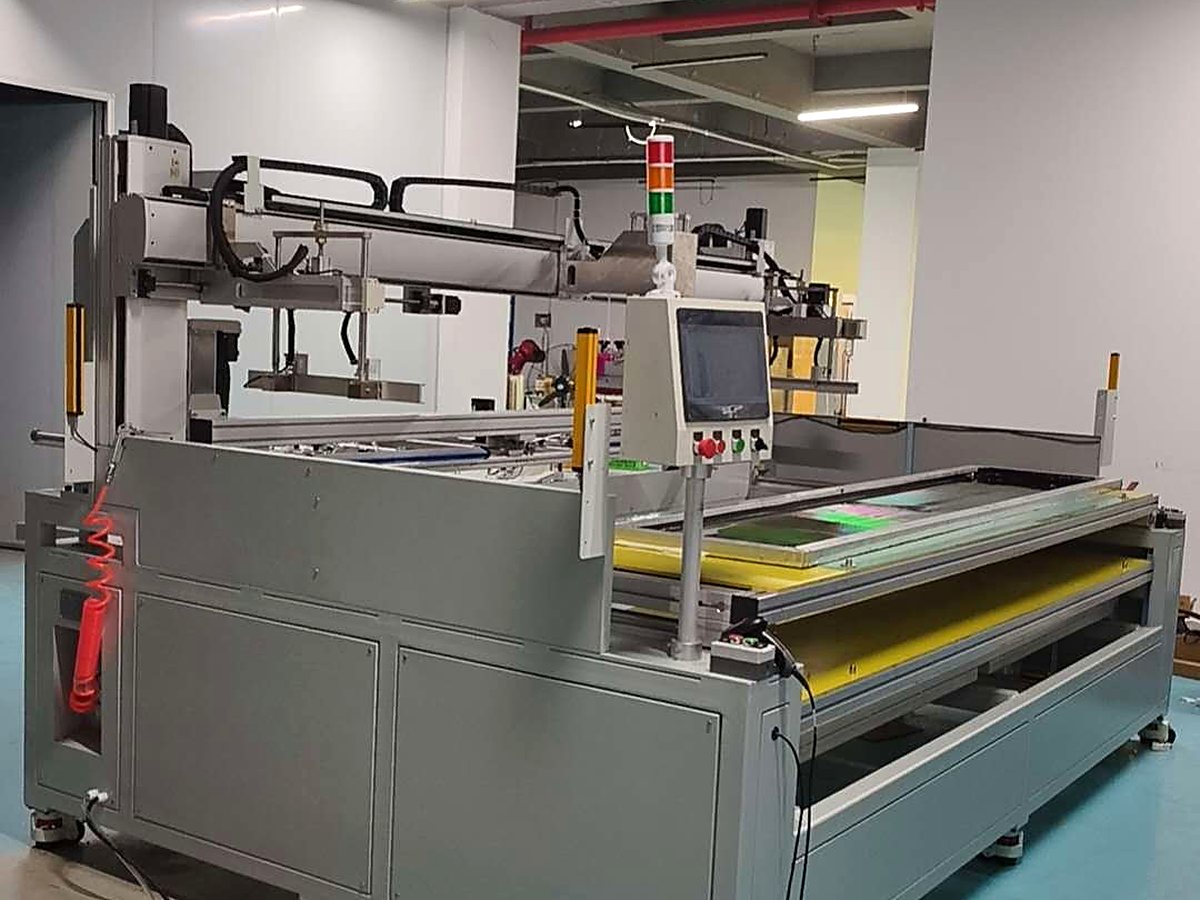
Large-format dedicated production equipment
Large-format dedicated equipmentProduction equipment for glass, ceramic and enamelware
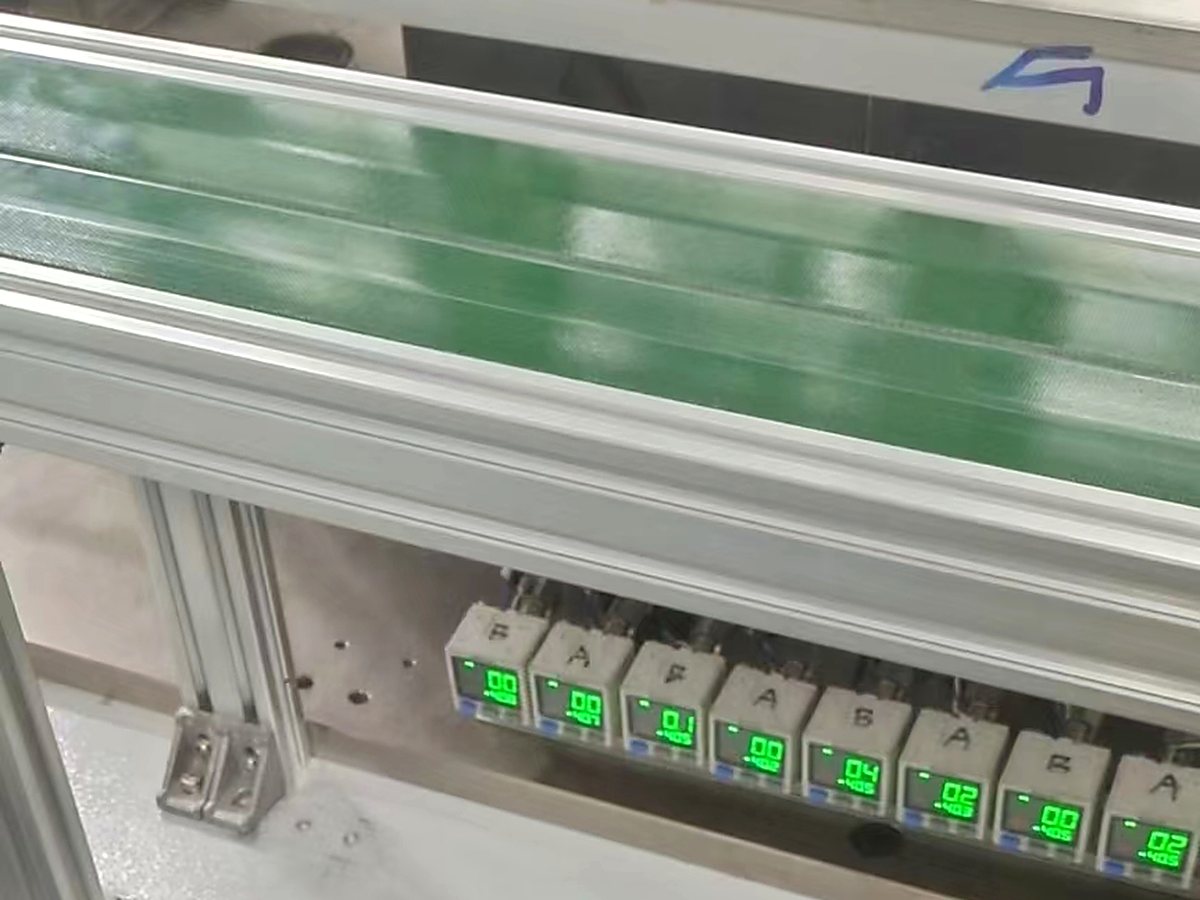
Detail of conveyor line and pneumatic actuators
Conveying and pneumatic actuationStation cycle timing, presence sensing and lift-and-locate
Assembly equipment general arrangement
Assembly Equipment

Assembly Equipment

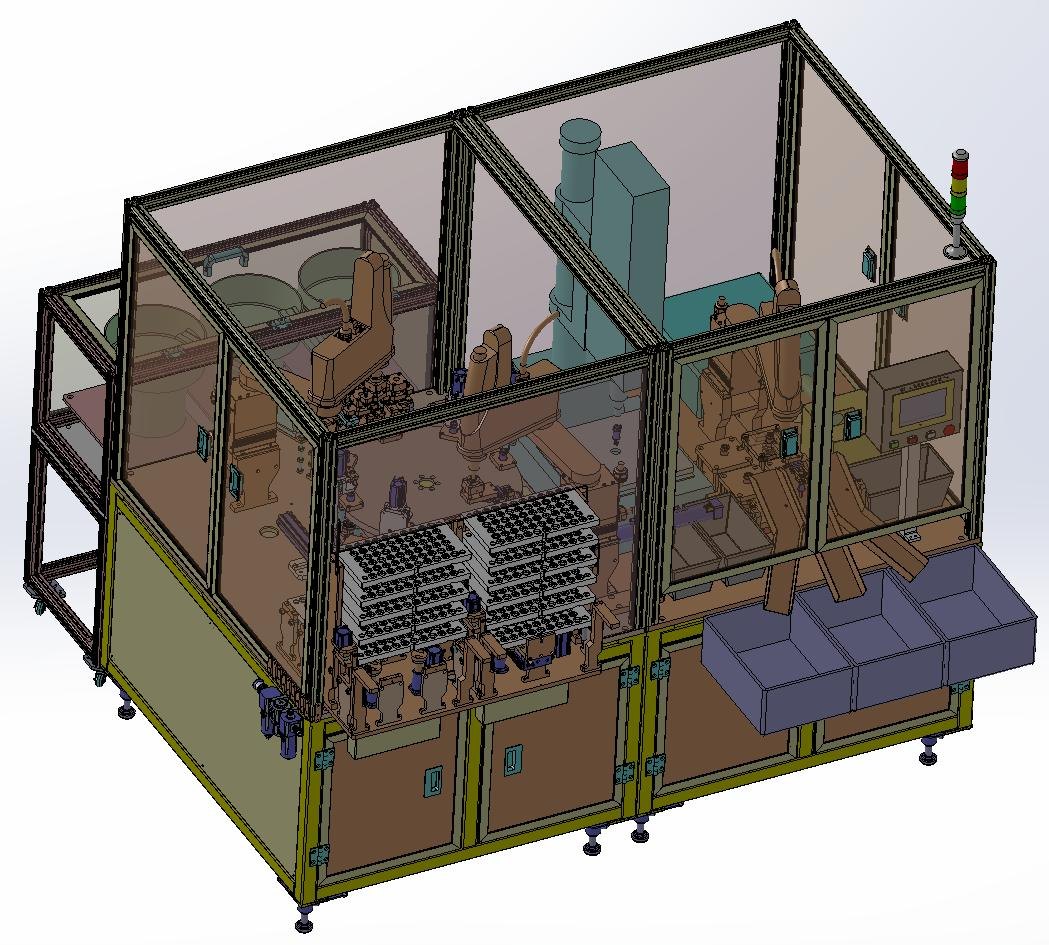
Automated assembly for small and irregular parts. Flexible feeding is the entry point: loose incoming parts are turned into an ordered, oriented, graspable state before multi-station assembly and pressing.
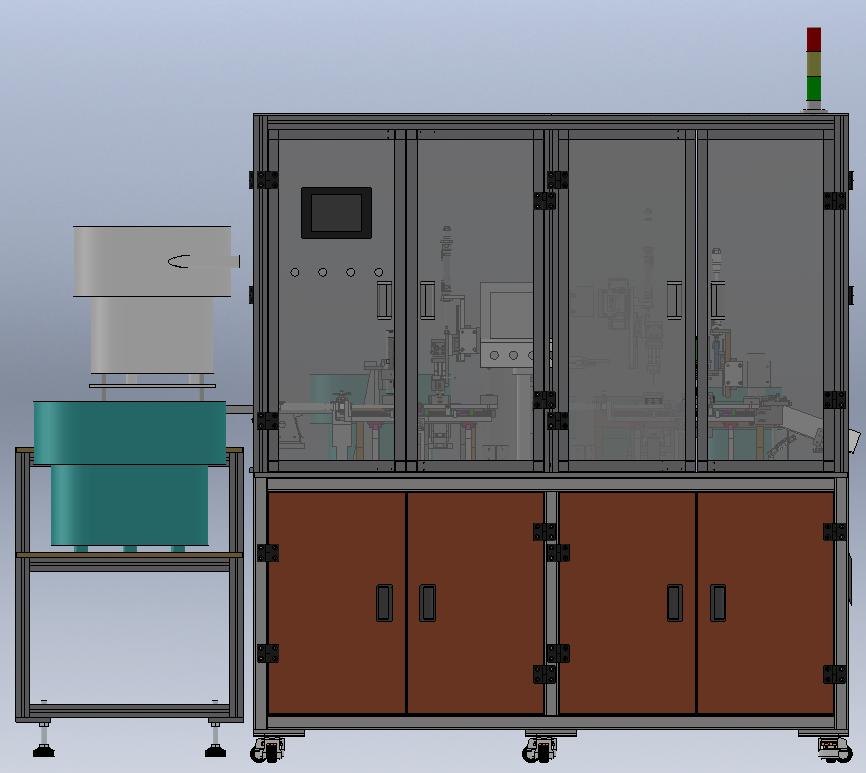
  • Flexible Bowl Feeding — Springs, shafts, hooks and retaining rings fed by linear feeder, bowl feeder or magazine according to shape, solving tangling, jamming and unpredictable orientation.
  • Multi-station assembly and pressing — Separating, orienting, assembling, flipping and snapping chained to the cycle time, with stations added or removed as needed.
  • In-line poka-yoke — Seating, orientation and count verified three ways, with faulty parts intercepted and logged automatically.
Assembly cell

Standalone assembly cell

Suited to pilot runs and small batches; can later be folded into a line.
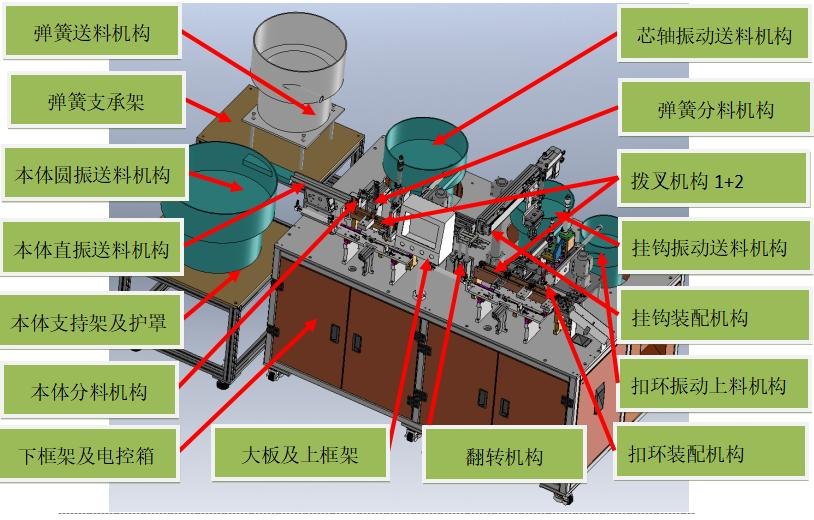
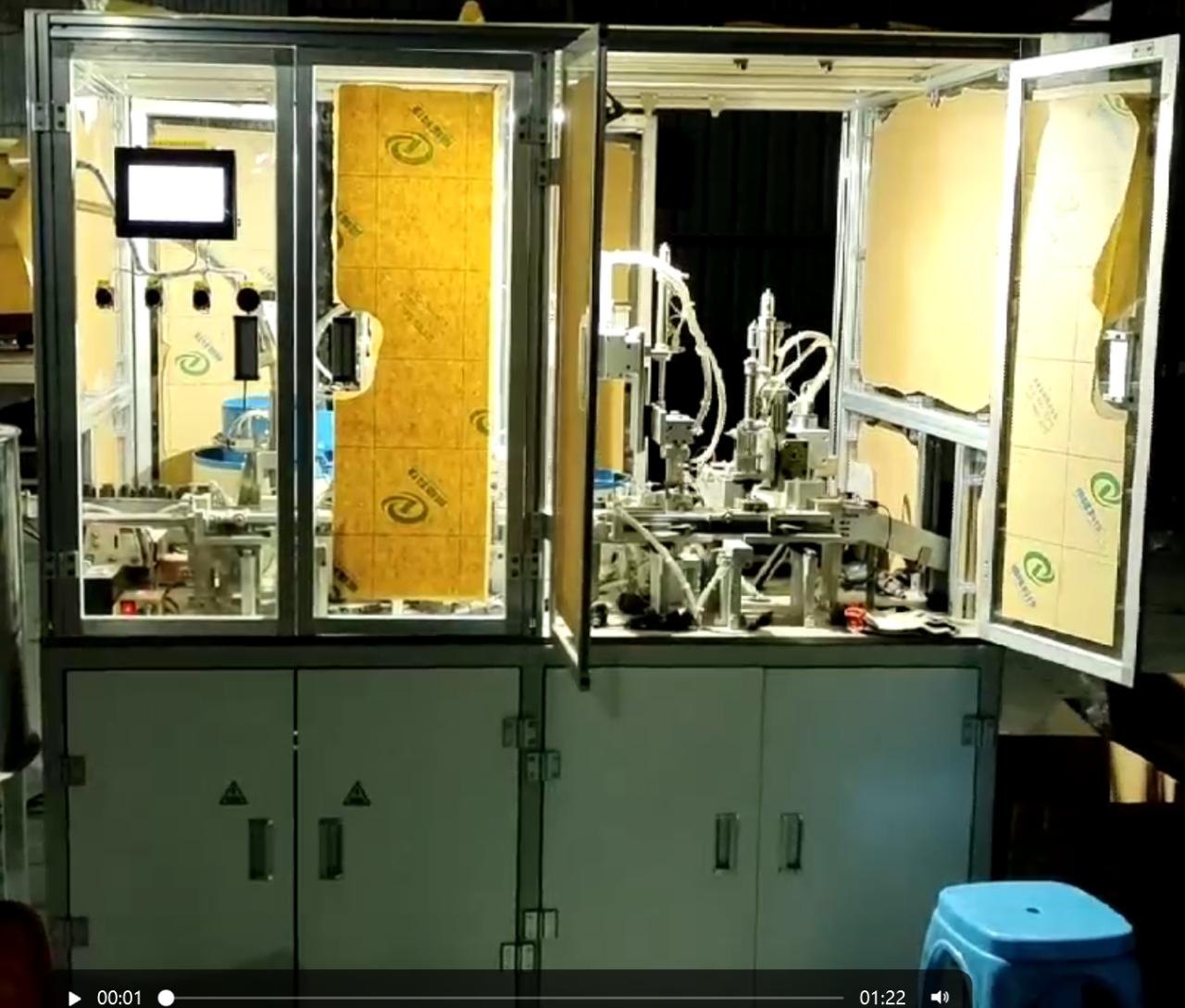
Complete assembly machine

Full assembly line

Multiple stations in series, including load, unload and inspection.

Assembly mechanism detail

Dedicated feeding mechanism

Feed, separating and orienting mechanisms built around the part geometry.

ItemTypical rangeNotes
Part weight range0.5 g – 200 g small partsIrregular metal, plastic and rubber parts
Feeding methodBowl feeder / linear feeder / magazine / traySelected to suit part geometry and cycle time
Assembly stations2 – 12 stationsExpandable as required
ControlPLC + HMI / industrial PCRecipe-based, supports product changeover
Data interfaceRS232 / RS485 / EthernetConnects to MES and the line network
Cleaning Equipment

Cleaning / Wiping Equipment

Automatic cleaning of both faces of a part with solvent and wiping material. Compared with manual wiping, consistency, cleanliness and throughput are far more controllable, and operator exposure to solvent is reduced.
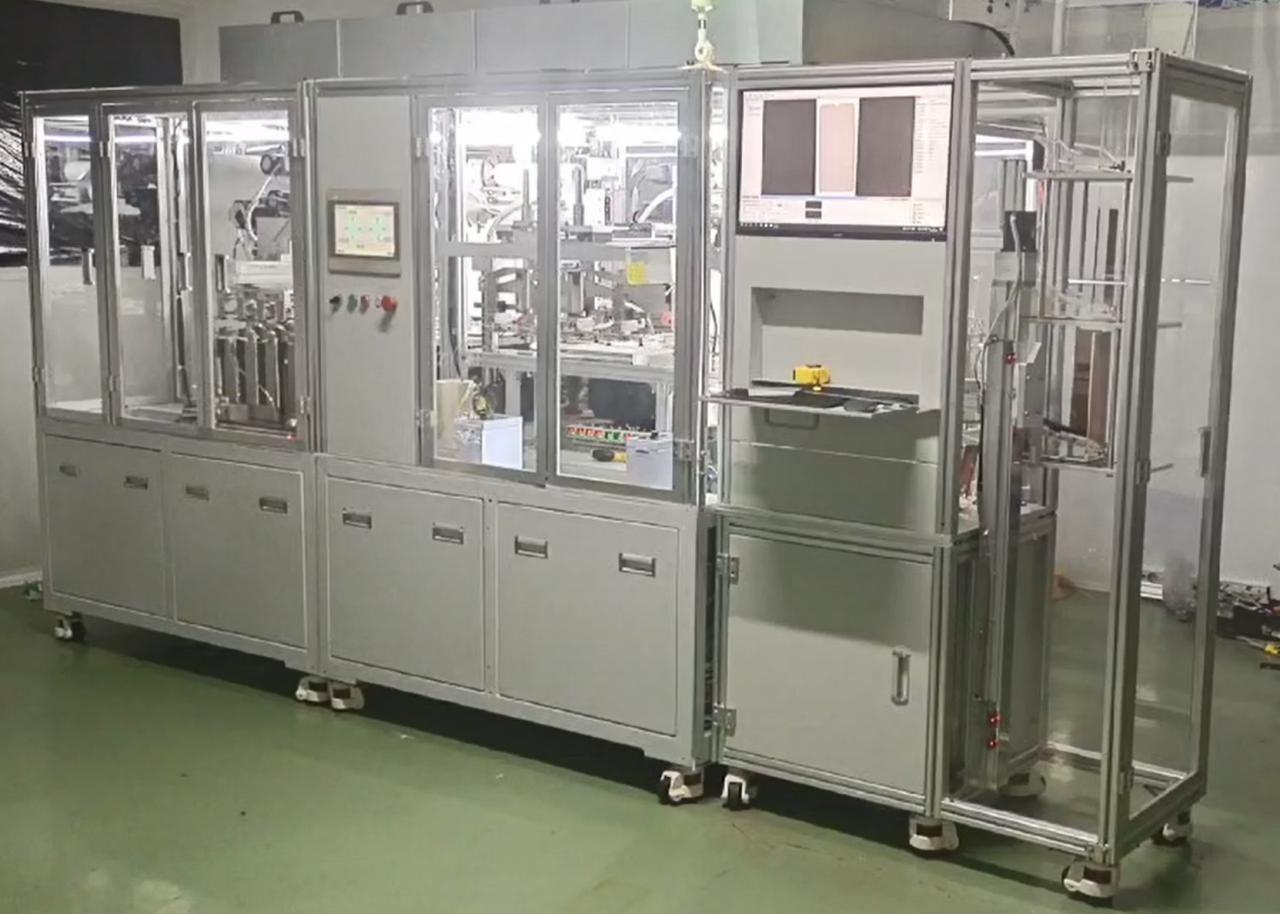
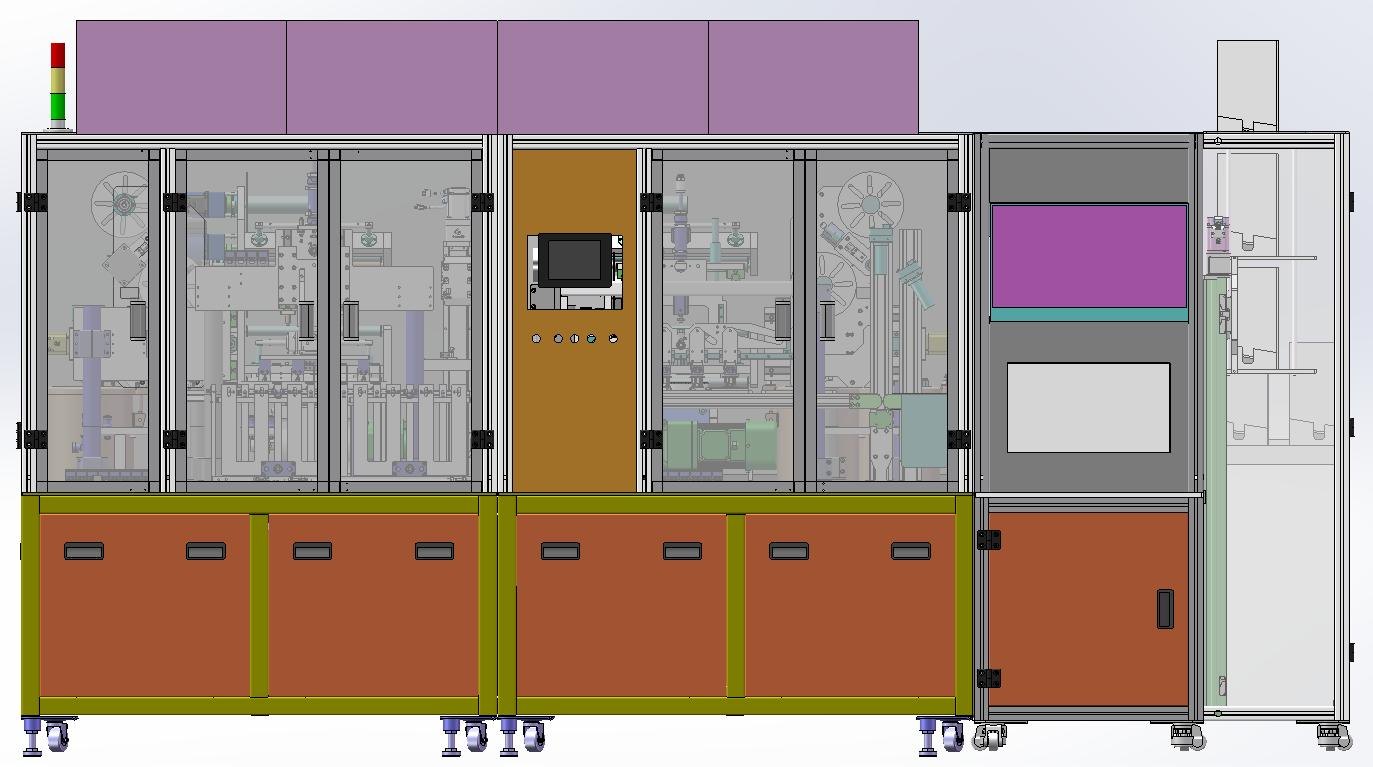
  • Double-sided cleaning carousel — Both faces are wiped on the carousel, with flipping handled automatically by a manipulator.
  • Multi-station series — Washing, rinsing and drying chained as the process requires, with each station's parameters adjusted independently.
  • Solvent management and recovery — Level and concentration monitoring with waste-liquid recovery, cutting consumption and discharge.
Cleaning equipment layout
Cleaning line

In-line cleaning cell

Hands over automatically to the neighbouring processes and can be embedded in an existing line.

Complete cleaning machine

Standalone cleaning machine

A self-contained machine with solvent tank, cleaning stations and an unload mechanism.
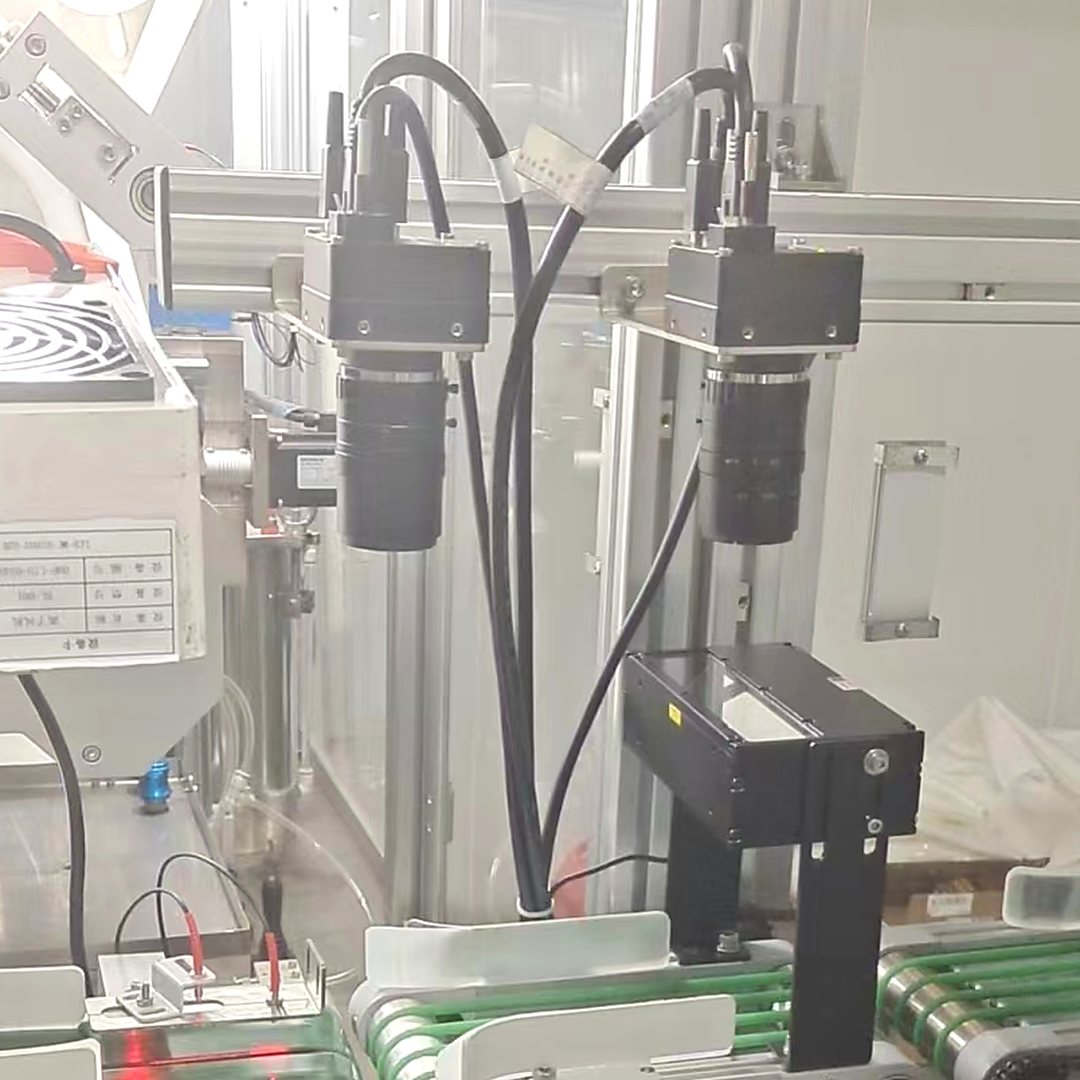
Multi-camera vision inspection station, photographed on site
Vision Inspection

Vision Inspection Equipment

In-line full inspection with multiple cameras and stations. A four-station rotary platform lets one load cover several faces, with thickness, appearance and dimensions checked in a single pass.
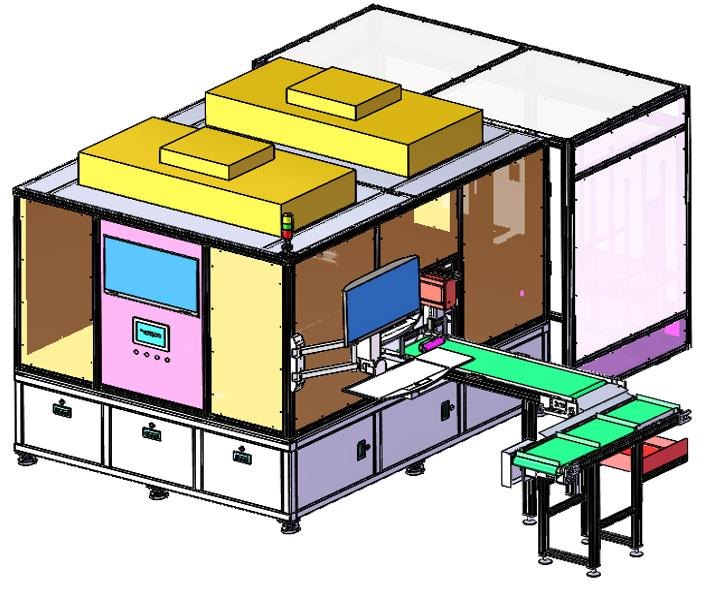
  • Multi-camera coordination — Each station camera checks a different feature, and a transfer module can be added to capture other angles.
  • Thickness and dimensions — Laser or vision thickness stations, with tolerance judgement configured to the process.
  • Automatic NG sorting — Rejects are ejected into NG bins and separated by category.
  • Inspection data logging — Images and results archived, supporting batch traceback and process analysis.
Complete vision inspection machine

Standalone inspection machine

A self-contained inspection machine with its own loading and unloading.
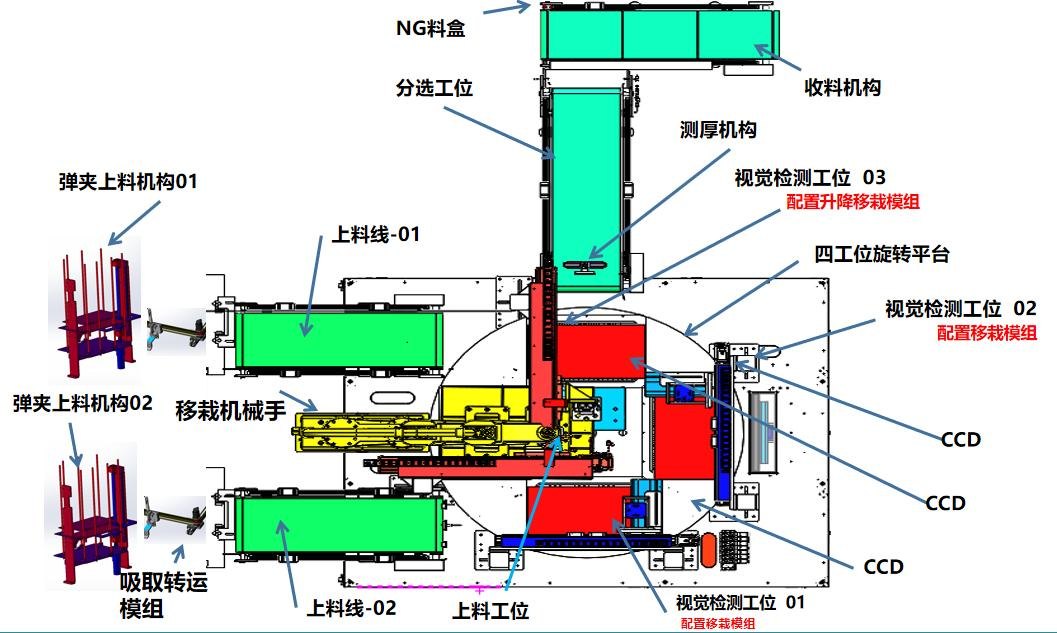
Four-station inspection platform

Four-station rotary platform

Loading, inspection, sorting and unloading run in parallel for a faster cycle.

Conveyor Line

Speed-Chain Conveyor Line

Pallets travel on a speed chain and are lifted and located at each station. The number and order of stations can be arranged freely to suit the process — the most common backbone for an automated line.
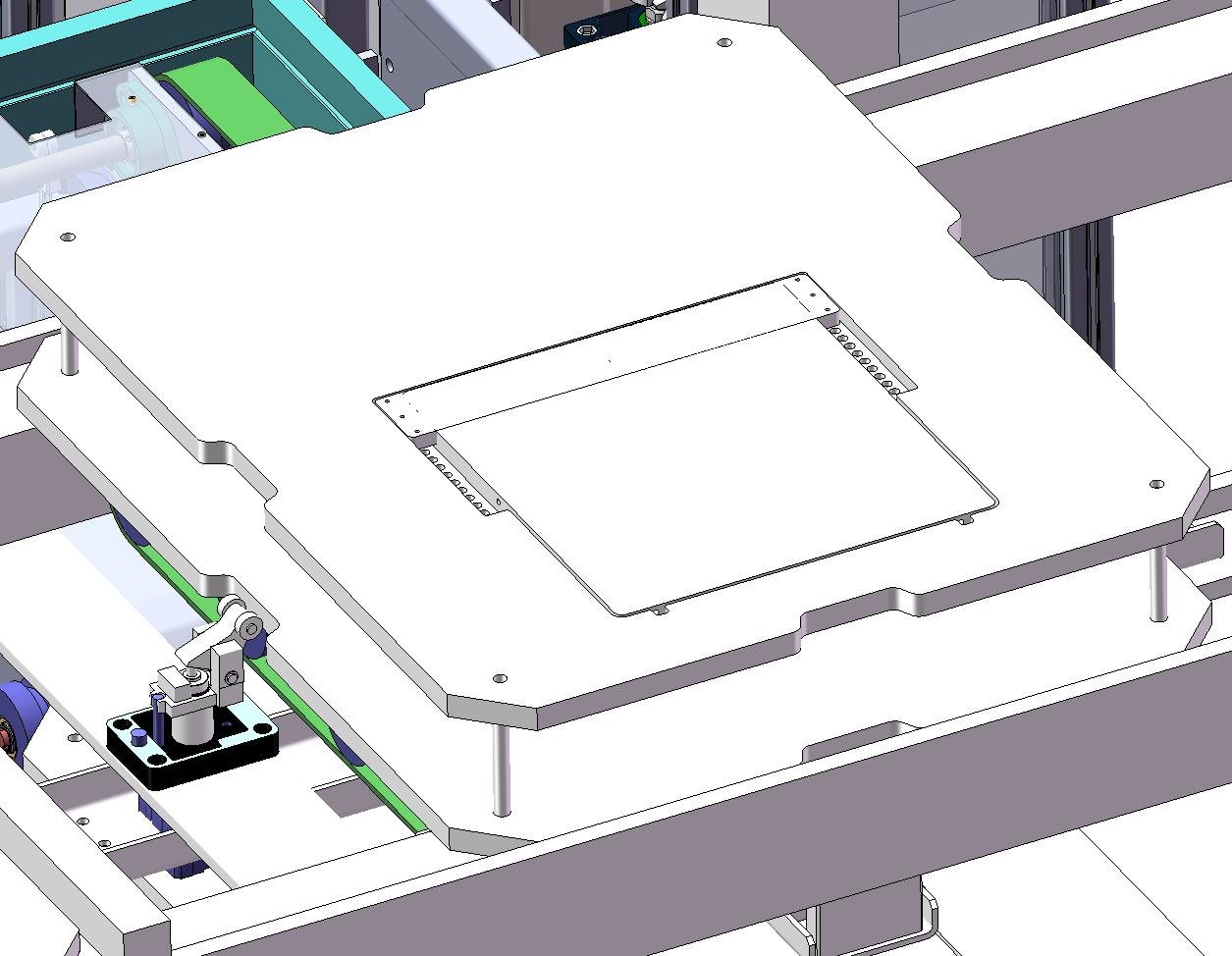
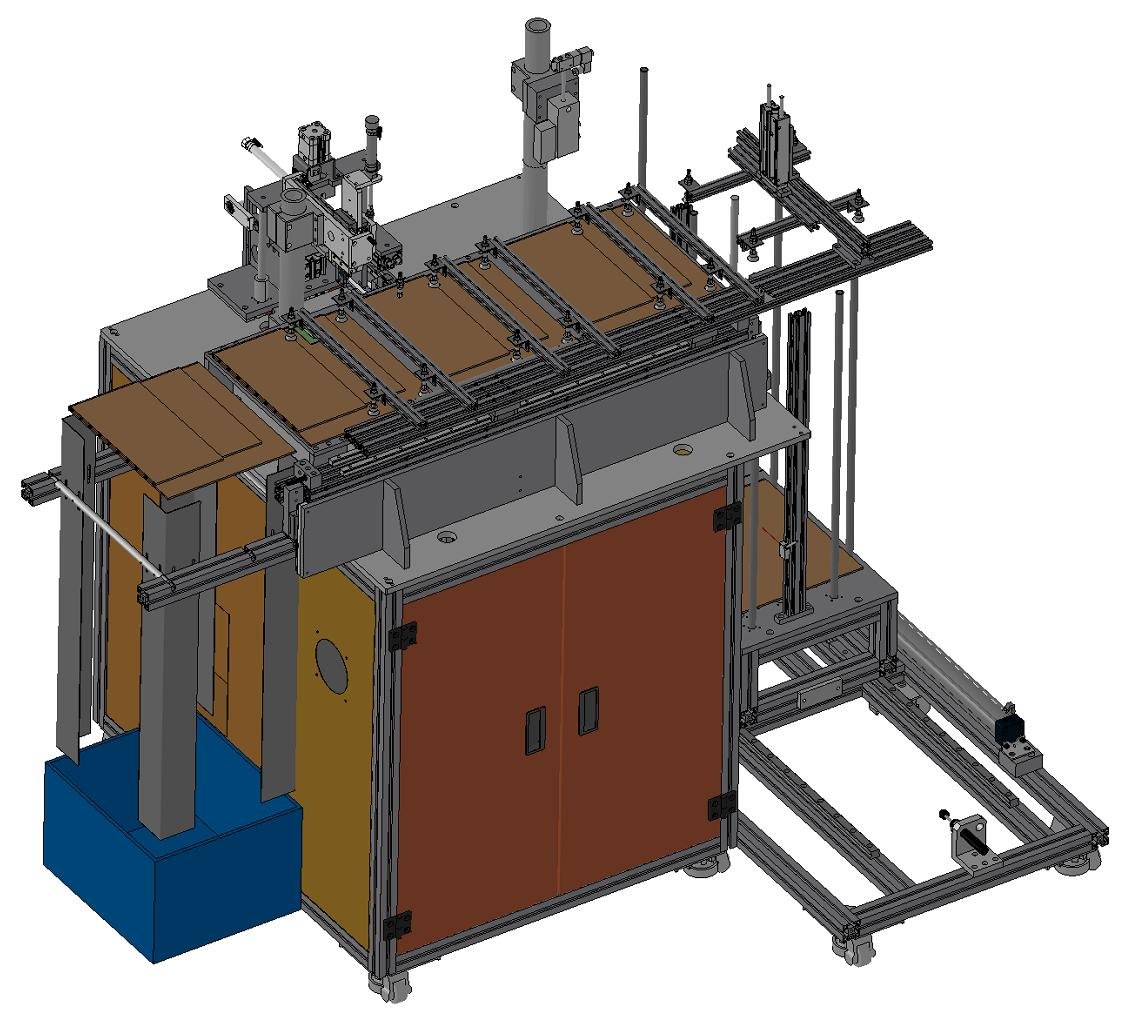
  • Pallet transport + lift-and-locate — Stable positioning accuracy, making manipulator and machine work reliable.
  • Stations added or removed freely — Expansion later means adding sections and stations, not rebuilding the structure.
  • Mixed-model production — Pallet identification and recipe switching support mixed-model running.
Speed-Chain Conveyor Line
Hot-Melt Dispensing Machine
Hot Melt Dispensing

Hot-Melt Dispensing Machine

Metered hot-melt delivery along a programmable path applies dots, lines or areas. With vision positioning, part offset is compensated automatically, reducing dependence on consistent incoming parts.
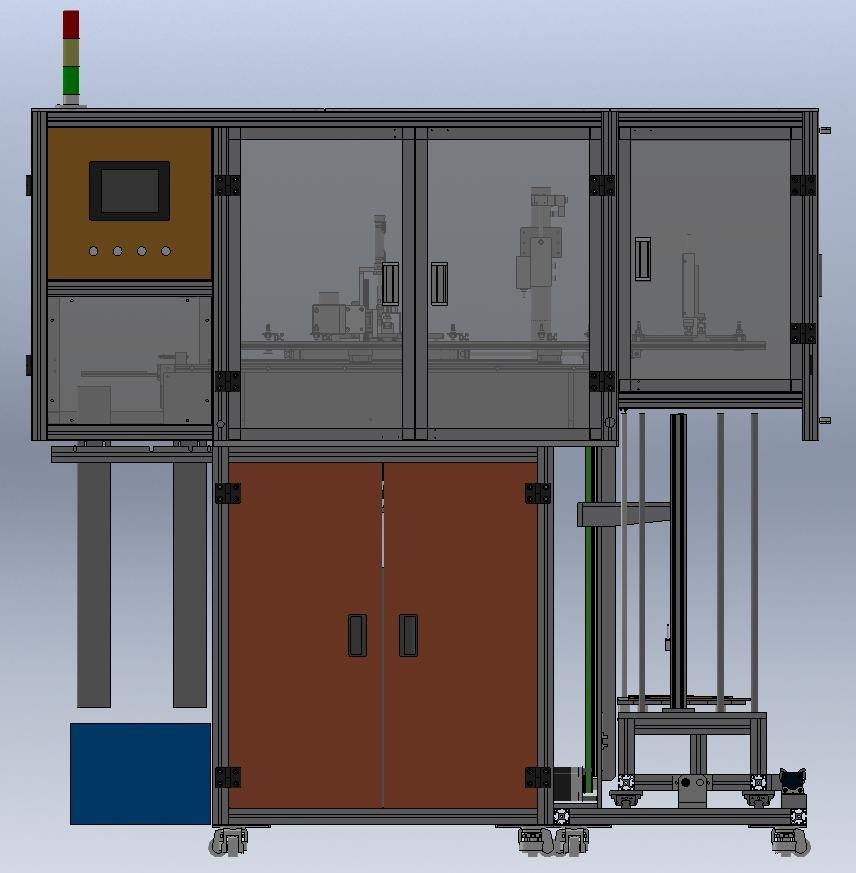
  • Metered glue delivery — Closed-loop control of volume, temperature and pressure for stable, string-free dispensing.
  • Programmable path — Dispensing paths are stored as recipes per product, so changeover needs no program edits.
  • Vision offset compensation — Automatic alignment when part position varies, improving application consistency.
Dispensing machine structure

Structural detail

Complete design including the glue supply unit, frame, control cabinet and safety door.

Complete dispensing machine

Machine overview

Interfaces with a speed-chain line for in-line dispensing.

Robot Integration

Robotic Edge Trimming / Welding Integration

A 6-axis robot takes on trimming, grinding and welding — repetitive, heavy-duty work where consistency matters — replacing human labour in dust, arc flash and high physical load.
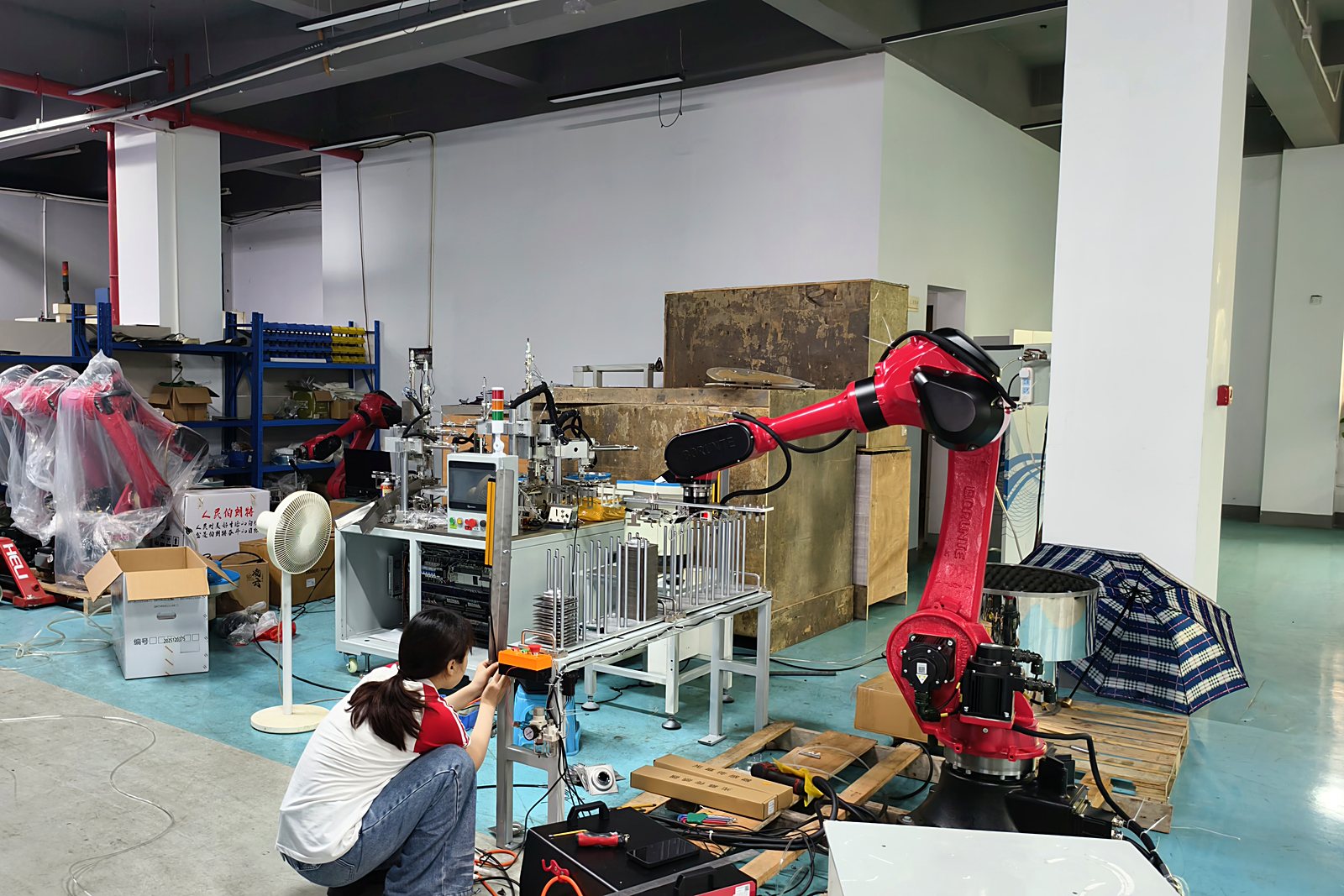
  • Robotic trimming / grinding — Path teaching with force-controlled compensation to absorb part-size variation.
  • Robot and welding machine interlocked — Positioner, welding power source and robot work together, completing multiple welds in a single clamping.
  • Safety and fume extraction — Fencing, light curtains, dust and fume extraction configured to site conditions.
6-axis industrial robot during commissioning
Robot and welding machine working together

Robot and welding machine working together

Welding power source, positioner, extraction and robot are enclosed as one workstation, so several operations are completed in a single clamping with less handling and re-fixturing error.
  • Workstation design — Guarding, extraction, lighting and operator panel designed as one unit.
  • Flexible changeover — Quick-change fixtures with program recall for multiple products on one line.
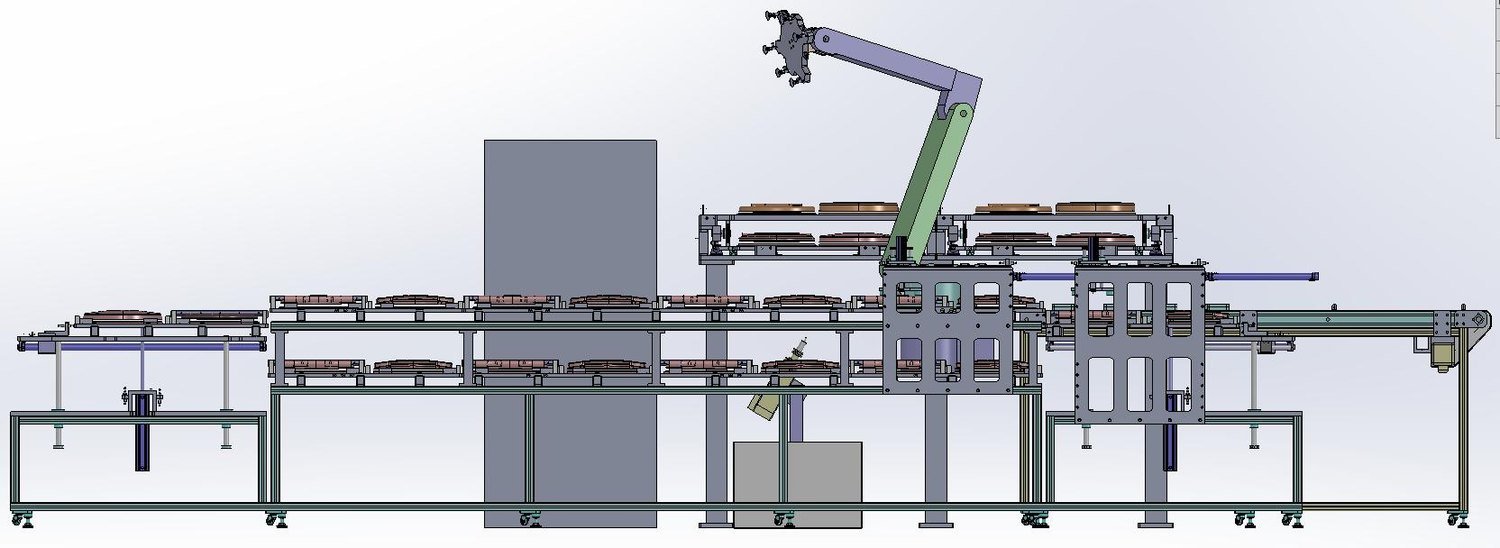
Trimming line layout

Trimming line layout

Robot workstation combined with a conveyor line.
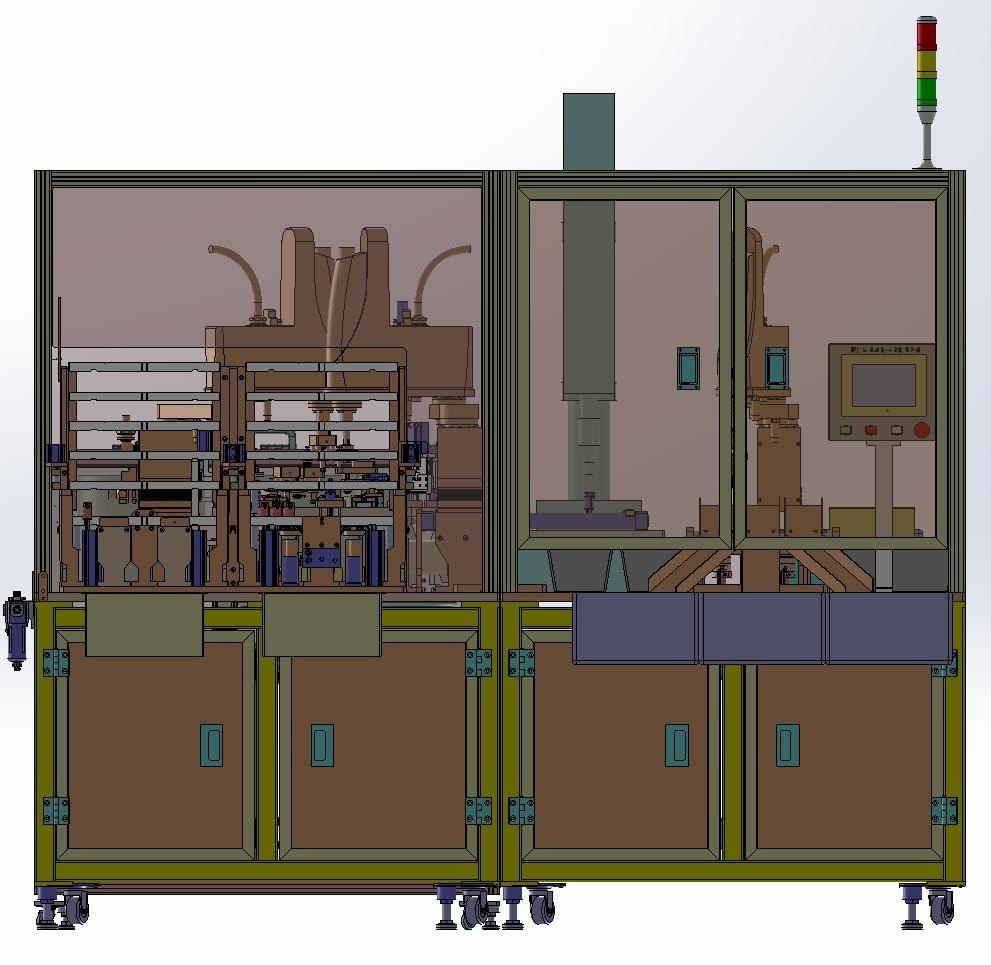
Welding workstation

Welding workstation

A self-contained unit with positioner, guarding and extraction.
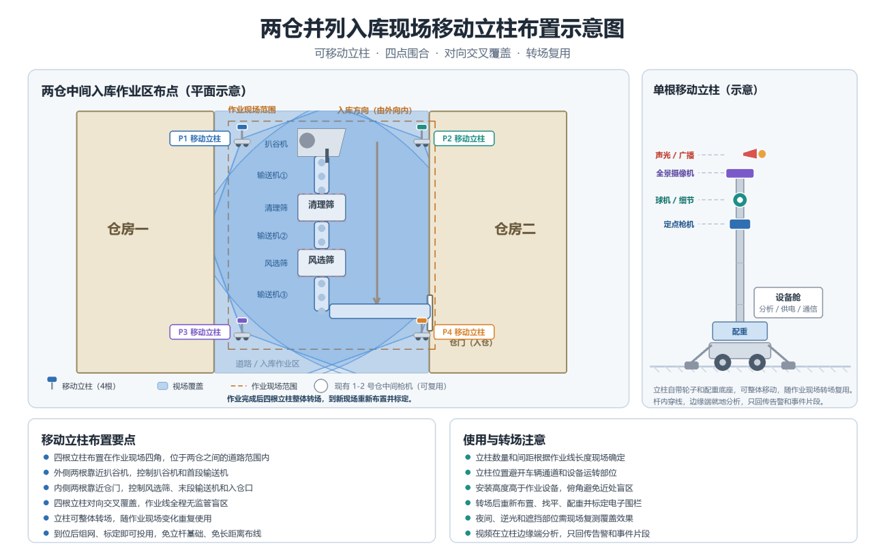
Mobile mast layout diagram
Smart Storage

Smart Storage Monitoring Equipment

For large working areas such as grain depots and material yards, movable and reusable monitoring equipment replaces a dense array of fixed cameras — lower cost, better coverage.
  • Mobile mast — Masts on wheels with weighted bases; four corner positions cover the working area, and the whole set relocates when the area moves.
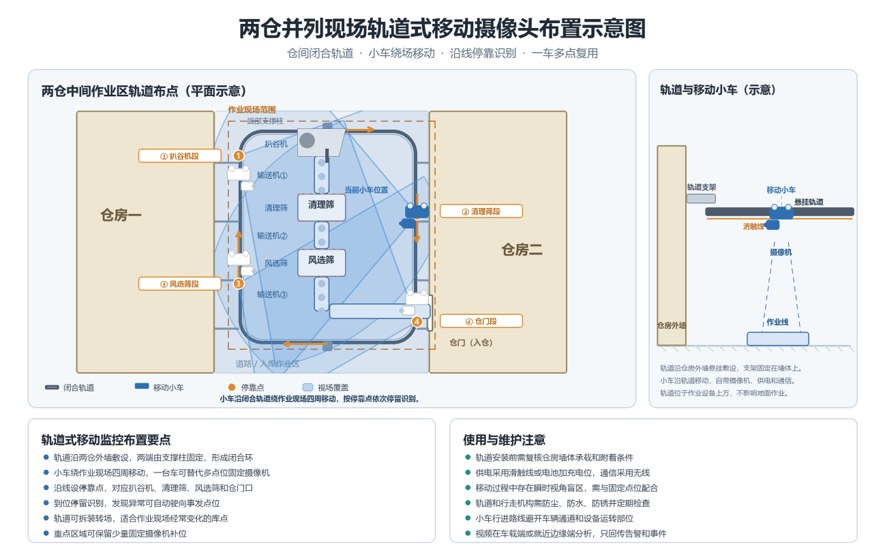
  • Rail-mounted moving camera — A closed track on the outer wall carries a camera trolley on an inspection circuit, so one device covers many positions.
  • Silo access control interlocked with the environment — Face-recognition access control interlocked with gas detection, so the environment is confirmed safe before entry.
Rail-mounted camera layout diagram

Rail-mounted monitoring layout

A closed track along the outer wall lets a trolley circulate and stop at set points to identify; one trolley can replace several fixed cameras.

No model above matches what you need? That is our normal case

More than seventy percent of our projects start with a process problem and only then find their equipment form. Describe your process and we will work it out together from the concept end.

Tel +86 159 6080 5171  ·  Email soda@byrobot.com.cn

Submit a process requirement See industry solutions